Past Humanities Courses
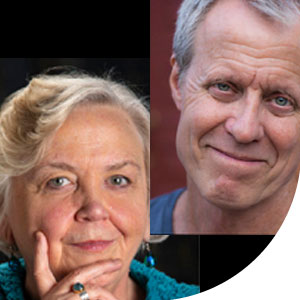
The Great Soliloquies of Shakespeare
Listen in on the innermost thoughts of Shakespeare’s larger-than-life characters. Read beyond the famous first lines and take a closer look at the passages that continue to inspire us more than four hundred years after they were written.
Tuesdays, March 12 – Apr 2
1:30 – 3:30 pm
Instructor: Cynthia Meier
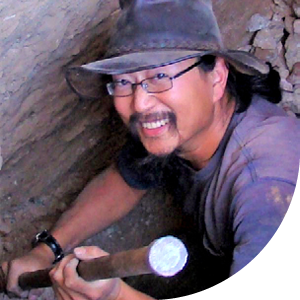
The Culture, History and Archaeology of Ghana: Notes from the Field
Please join Dr. Matthew J. Rowe, instructor of the Learning Curve’s Tracking the Footsteps of Humanity, World Archaeology, In Search of the First Americans, and Spelunking Through Prehistory for a 2-hour talk on Ghanaian Culture, History, and Archaeology.
Friday, March 8
2:00 - 4:00 pm
Instructor: Matthew J Rowe
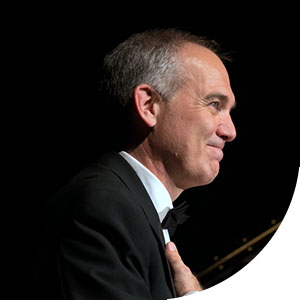
Soundtrack of the Seventies
Delve into the stories and sounds of lyric legends such as Bob Dylan, Dolly Parton, Paul Simon, Carole King, Jim Croce, Joni Mitchell, James Taylor, and more with musician Khris Dodge and friends. Blending lecture and performance, these three sessions will focus on the music that defined a decade.
Khris Dodge, Executive Director of the Tucson Jazz Festival and conductor and Music Director for the Tucson Pops Orchestra.
Thursdays, March 7 – 21
1:30 pm – 3:30 pm
Instructor: Khris Dodge
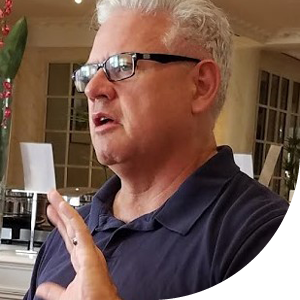
Capturing Color and Light: Impressionism in Art and Music
Taken from the title of a Monet painting, the term was first used for the visual arts, but soon included the musical arts as well. Examine the use of the term Impressionism with a focus on painters, Monet and Renoir along with composers, Debussy and Ravel, all contemporaries of one another. Enjoy both visual and musical masterpieces as you learn about the social and political environment that influenced these cultural giants.
Wednesdays, Feb 21 – March 13
10:00 am - noon
Instructor: Kevin Justus
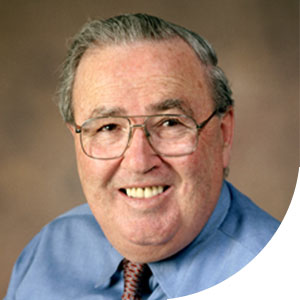
Britain and the Middle East
Britain has had a long-standing connection to the Middle East in the modern era. The Ottoman Empire was long supported by Britain in the 19th century and the 1917 Balfour Declaration marked British interest in the politics and oil of the Middle East. The current conflict between Hamas and Israel is just the most recent event that has forced Britain’s choices in foreign policy.
Tuesdays, Feb 13 - Mar 5
1:30 – 3:30 pm
Instructor: Richard A. Cosgrove

Let’s Face the Music and Dance!
Celebrate the movie musicals that starred the greatest dancers of the 20th Century. We’ll explore the rich history of dance in movie musicals and toast the directors, choreographers, and stars who created dance works of art on film. Put on your dancin’ shoes! It’s lights, camera, action for an all singing, all dancing spectacular!
Tuesdays, Jan 9 – Feb 27
10:00 am - noon
Instructor: Richard T. Hanson
Afternoon Delight: Jazz at the Century Room
Take your seat in the Century Room, Tucson’s only dedicated jazz club and enjoy a special performance featuring local jazz musicians. Proceeds benefit the Tucson Jazz Festival.
Sunday, Dec 17
4:00 – 5:30 pm
Instructor: Khris Dodge
Vermeer and the Dutch Golden Age
Following the blockbuster Vermeer Exhibit at the Rijksmuseum in Amsterdam, we’ll examine the details and remarkable beauty of Vermeer’s work and consider the Holland of his time, the factors that made him unique and his remarkable sensitivity to the world of women.
Wednesdays Dec 6 – 20
9:30 am – 11:30 am
Instructor: Kevin Justus
New Orleans Jazz: Past, Present and Future
Embark on a musical pilgrimage to New Orleans, the birthplace of jazz. Explore the rich history of this uniquely American music and listen to the innovative next generation of musicians who will carry our American soundtrack forward.
Wednesdays, Nov 8 – Dec 6
1:30 – 3:30 pm
Instructor: Khris Dodge
Britain’s Pathway to World Supremacy (1760 – 1830)
The industrial revolution marked the beginning of modern Britain, created sustained economic growth, a class system that still defines modern society and established Great Britain as the most powerful nation on earth.
Tuesdays, November 7-Dec 5
1:30 – 3:30 pm
Instructor: Richard A. Cosgrove
Some Enchanted Evening
Celebrate the Golden Age of American Musical Comedy, appreciate the scores created by legendary songwriters and view archival footage of performances by Broadway stars that created musical memories for generations of theatre goers.
Tuesdays, Oct 24 – December 5
10:00 am - noon
Instructor: Richard T. Hanson
The Voice of Wales
Listen for the voice of Wales as we examine the work of ten poets spanning centuries and spinning unforgettable images. Examine works by Dylan Thomas, Roald Dahl, R. S. Thomas, Gillian Clarke, Sarah Waters, Owen Sheers and more.
Thursdays, Oct 19 – Nov 16
1:30 – 3:30 pm
Instructor: Cynthia Meier
Tracking the Footprints of Humanity
Follow the archaeological evidence from Miocene apes in Africa through the peopling of the Americas as we discuss evolution, early hominids, art and cave paintings, and recent discoveries that are changing our understanding of the development modern humans.
Oct 19 – Dec 7
10:00 am – noon
Instructor:

The Music of Ukraine: The Road to Independence
Trace the historical evolution of Ukrainian folk and classical music, examine its Russian and Polish counterparts and learn about the development of a Ukrainian national style.
Wednesdays, Sept 27 – Nov 8
2:00 – 4:00 pm
Instructor: Alexander Tentser
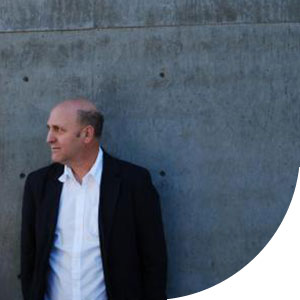
The Language that Rises: Gertrude Stein in her World
Examine the life and work of Gertrude Stein who expanded, envisioned and explored language in a way no one else has ever done. She was the center of art in Paris from 1903 – 1938, with a salon that included Picasso, James Joyce, Ezra Pound, Alice B Toklas, Ernest Hemingway and more.
Wednesdays , Sept 27 – Nov 1
9:30 am – 11:30 am
Instructor:
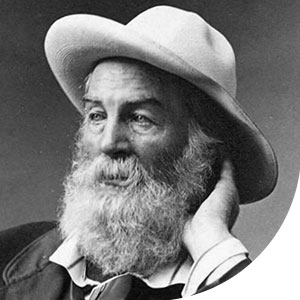
Walt Whitman
Discover and discuss these often-overlooked treasures in a series of lectures that will expand your understanding of and appreciation for the giants of American literature.
Friday Apr 7
10:00 am – noon
Instructor: William A. Fry
Discovering The American Soundtrack Through the Lens of Jazz
Through a mix of live performance and recorded samples, take a journey through time as we experience music, gain different levels of understanding, and realize the “power of now” in Jazz Music.
Thursdays, Mar 9 - 30
1:30 – 3:30 pm
Instructor: Khris Dodge
The Creative Intersection of Art and Theatre
Explore the influence of the fine arts on the theater and vice versa in the 16th – 19th centuries and consider the cultural context and the exchange of ideas that shaped both disciplines.
Wednesdays, Mar 8 – 29
1:30 – 3:30 pm
Instructor: Kevin Justus
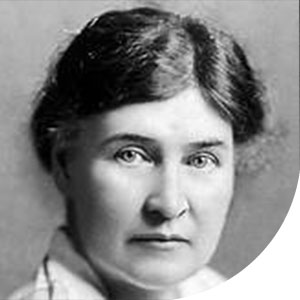
Willa Cather
Discover and discuss these often-overlooked treasures in a series of lectures that will expand your understanding of and appreciation for the giants of American literature.
Friday Mar 3
10:00 am – noon
Instructor: William A. Fry
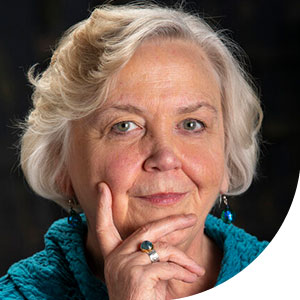
Reading Between the Lines
Examine the unique voice of contemporary Irish playwrights, including John Millington Synge, Sean O’Casey, Samuel Beckett and Conor McPherson.
Thursdays, Feb 9 - Mar 2
1:30 - 3:30 pm
Instructor: Cynthia Meier
Spelunking through Prehistory: The Archaeology of Caves and Rock Shelters
Explore human prehistory, archeological methodology and theory through the lens of caves and rock shelters as you learn about some of the world’s most spectacular archeological discoveries.
Thursdays Feb 9 – Mar 23
10:00 am – noon
Instructor:
The Secret Language of Versailles
Explore unknown rooms and easily missed details that hold the key to truly understanding this magnificent palace, its intriguing occupants and its continuing significance.
Wednesdays Feb 8 - Mar 1
1:30 – 3:30 pm
Instructor: Kevin Justus
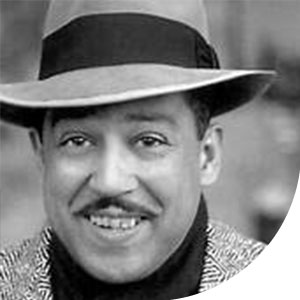
Langston Hughes
Discover and discuss these often-overlooked treasures in a series of lectures that will expand your understanding of and appreciation for the giants of American literature.
Friday Feb 3
10:00 am – noon
Instructor: William A. Fry
British Adventurers and Explorers
Sir Francis Drake, Captain James Cook and others set out to explore faraway territories and played an important part in the expansion of the British Empire. Hear their stories and examine their motivations in this armchair journey of discovery.
Wednesdays, Feb 1 – Feb 22
10:00 am – noon
Instructor: Richard A. Cosgrove
And the Beat Goes On… The Saga of Television and American Rock and Roll
Television and Rock and Roll – a match made in heaven! We’ll chronicle three decades of American Pop Music from the Rock and Roll of the 1950s to the Rhythm and Blues of Motown of the 1960s to Disco of the 1970s.
Tuesdays: Jan 17 - Mar 7
10:00 am - noon
Instructor: Richard T. Hanson
Black, White and Shades of Gray: Classic Fine Art Photography of the 20th Century
Individually made from negatives in the dark room, modern black and white photography established a new art form. Revisit famous images by legendary photographers and discover hidden gems in four lectures plus a visit to the UA Center for Creative Photography.
Thursdays Jan 12 - Feb 2
1:30-3:30pm
Instructor:
The Golden Repertoire of Schubert, Brahms, and Debussy
Immerse yourself in the glorious works of Schubert, Brahms and Debussy in this series combining lectures with performances by the instructor.
Wednesdays, Jan 11 – Feb 22
2:00 – 4:00 pm
Instructor: Alexander Tentser
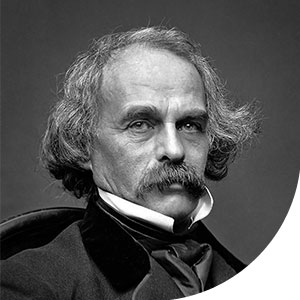
Nathaniel Hawthorne
Discover and discuss these often-overlooked treasures in a series of lectures that will expand your understanding of and appreciation for the giants of American literature.
Friday Jan 6
10:00 am – noon
Instructor: William A. Fry
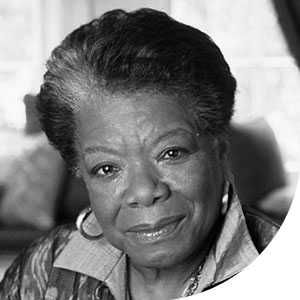
Maya Angelou
Discover and discuss these often-overlooked treasures in a series of lectures that will expand your understanding of and appreciation for the giants of American literature.
Friday Dec 2
10:00 am – noon
Instructor: William A. Fry
The Art of Spain: El Greco, Velasquez, Goya and the Evolution of Spanish Art
Take a closer look at Spanish art from the late 16th Century to the beginning of the 19th Century as you investigate the turbulent rise and fall of Monarchial Spain, the Golden Age of Spanish Baroque and the eventual twilight of Spanish art.
Wed Nov 30 – Dec 21
1:30 – 3:30 pm
Instructor: Kevin Justus
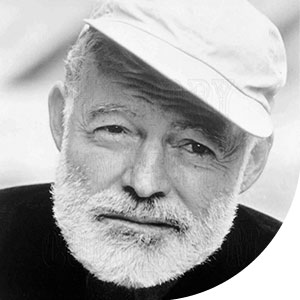
Ernest Hemingway
Discover and discuss these often-overlooked treasures in a series of lectures that will expand your understanding of and appreciation for the giants of American literature.
Friday Nov 4
10:00 am – noon
Instructor: William A. Fry
The Great Short Stories of Charles Dickens
Best known for his novels, Dickens also wrote hundreds of short stories. Read and discuss selected stories from the famous Pickwick papers to his beloved Christmas stories, in this four lecture series.
Thursdays Oct 20, 27, Nov 3 and 10
1:30 - 3:30 pm
Instructor: Cynthia Meier
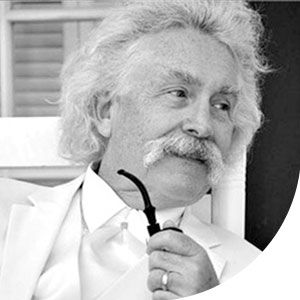
Mark Twain
“Italian Guides” and “The Tomb of Adam” from Innocents Abroad (1869)
Friday Oct 7
10:00 am – noon
Instructor: William A. Fry
Crowning Glories: The Lives and Legacies of Twelve English Queens
Discover the stories of twelve influential women who wore the crown and changed English history. Matilda, Eleanor of Aquitaine, the six wives of Henry the 8th, Mary and Elizabeth Tudor, Victoria and Elizabeth II.
Wednesdays Oct 5, 12, 19 Nov 2
10:00 am – noon
Instructor: Richard A. Cosgrove
Beethoven, Schumann and Chopin: Revolutionaries at the Keyboard
Focus on the impact of these three musical giants who revolutionized piano repertoire and performance technique in this combination of lecture and performance.
Wednesdays Sept 28 – Nov 2
2:00 – 4:00 pm
Instructor: Alexander Tentser
African-American Art: A Survey
Black American art is a key element of what defines American art. Examine the 300-year legacy of Black American painting, sculpture and other media in this 4-part lecture series.
Thursdays, Mar 17 – Apr 7
1:30 - 3:30 pm
Instructor:

A Musical Odyssey
In a six-part exploration of music from Bach to the present cellist and playwright Harry Clark will examine the connection between composer, performer and listener.
Thursdays, Mar 17 – Apr 21
10:00 am – noon
Instructor:
The Pen is Mightier than the Sword
Embark on a literary and historical journey of American ideals, values, humanity, religion, culture, politics, and war as seen through the literature of our presidents.
Fridays, March 4 - 25
10:00 am - noon
Instructor: William A. Fry
A Tale of Two Cities: Rome and Paris in the Seventeenth and Eighteenth Centuries.
Rome and Paris are two of the world’s most beautiful cities, but they were not always that way. Consider how one city ceded artistic influence and political power to the other as we examine how Rome and Paris encouraged different ideas and agendas.
Wednesdays Feb 16 – March 30
1:30 – 3:30 pm
Instructor: Kevin Justus
World Archaeology: from Hunters and Gatherers to the Atomic Age
Explore the development of human culture after the emergence from Africa and entrance to the Americas.
Wednesdays, Feb 16 – Apr 6
10:00 am – noon
Instructor:
Who’s Not Afraid of Virginia Woolf?
Cynthia Meier, Co-Founder of The Rogue Theatre, will talk about Woolf’s life, times, and work, with special emphasis on Mrs. Dalloway, which she is adapting and directing this spring.
Thursdays, Feb 10 – Mar 10
1:30 – 3:30 pm
Instructor: Cynthia Meier
Great British Prime Ministers
Consider the legacy of twelve outstanding prime ministers from Sir Robert Walpole to Margaret Thatcher and examine their accomplishments in historical context.
Thursdays, Feb 10 – Mar 10
10:00 am - noon
Instructor: Richard A. Cosgrove
Ernest Hemingway & F. Scott Fitzgerald
Examine the tumultuous friendship of Hemingway and Fitzgerald through discussions of their work and the research of literary scholars.
Fridays Jan 21, 28, and Feb 4, 11
10:00 - noon
Instructor: William A. Fry
The Powerful Genius of Mozart
Mozart’s last piano concertos and symphonies profoundly affected the first generation of Romantic composers. Hear piano sonatas and concertos by Mozart as well as piano masterworks by Schubert, Mendelssohn and Chopin in this delightful combination of lecture plus virtuoso piano performance.
Wednesdays, Jan 19 – Feb 23
2:00 – 4:00 pm
Instructor: Alexander Tentser
This Joint is Jumpin’
Tracing the musical evolution of Ragtime to Jazz to Boogie Woogie to Swing, we’ll be singin’ and swingin’ to the solid stomp of the Great American Song Book of the 1930s and 40s.
Tuesdays. Jan 18 – Mar 8
10:00 am – noon
Instructor: Richard T. Hanson
FDR, The New Deal and The World Crisis, 1932-1945
The New Deal continues to resonate in American life and politics with the recent discussion surrounding the “Green New Deal” This series of four in-person lectures will focus on what the “real” New Deal intended and achieved and its impact on organized labor, the environment, popular culture and more.
Wednesdays, Oct 20 - Nov 10
10:00am - noon
Instructor: Michael Schaller
Dutch Painting in the Golden Age of Hals, Rembrandt and Vermeer
In six on-demand video presentations we will examine the variety, beauty and innovative qualities of the Golden Age as we view and interpret landscapes, portraits, still life and genre scenes, placing them in cultural and historical context.
Mondays, Oct 18 - Nov 22
Instructor: Kevin Justus
Best Friends and Betrayal
Explore the tumultuous friendship of Langston Hughes, often called the “Dean of African American Authors” and Zora Neale Hurston, often considered the most sassy, outspoken and independent woman writer of the times.
Fridays, Oct 15 - Nov 12
10:00am - noon
Instructor: William A. Fry
Another Openin’ Another Show!
The Saga of American Musical Theatre
As Broadway comes back to life and the theatres re-open, it’s a perfect time to celebrate America’s great gift to world: Musical Theatre! Explore the history and evolution of this uniquely American form of lyric theatre from its inception to Hamilton and toast the tunesmiths and stars of Broadway.
Tuesdays, Oct 5 - Nov 9
10:00am - noon
Instructor: Richard T. Hanson
Tracking the Footprints of Humanity
Perspectives from archaeology and paleoanthropology
Consider some of the major questions related to seven topics in the origins of humanity: evolution, bipedalism, encephalization, the development of tools and technologies, human expansion, art and cave paintings, and learn about recent discoveries in the field.
Thursdays, Sept 30- Nov 18th
10:00am - noon
Instructor:
Mozart’s Masses: The Turmoil Behind the Genius

Wolfgang Amadeus Mozart (1756-1791) has been given many titles by historians, choral scholars, and fans: child prodigy, genius, “touched by the divine” (in the case of the feature film Amadeus). What is typically omitted from such claims is the personal cost of Mozart’s fame, and how this turmoil is displayed in his music. Through a combination of lecture and concert performance, this two session course explores the personal history of Mozart – his early life as a child performer, his complex relationship with his father, his reluctant employment with the Catholic church, and his aspirations as an opera composer – discussing how these interactions colored his compositional style throughout his life.
Our first session is a 90-minute lecture discussing Mozart’s life and his sacred mass output. Focus will be given to his earliest mass setting, Missa brevis in D minor (K65) and his well-known, unfinished Requiem. We will examine how Mozart’s compositional style evolved between these two works, and how the two pieces parallel. In the second session, attendees can view a virtual concert of Mozart’s Missa brevis in D minor, performed by the Tucson Masterworks Chorale. This concert also features a premiere piece, Lux Aeterna, written by Tucson-native Russell Ronnebaum. This performance features strings from the University of Arizona Fred Fox School of Music, and soloists from the metro Tucson and eastern Washington areas.
Session 1: Lecture – available for viewing from Friday April 16 – April 25
Session 2: Virtual Choral Performance by Tucson Masterworks Chorale: Mozart’s Missa brevis in D minor, K65 – Available for viewing from Sunday, April 25 – May 16.
Instructor:
Composers, Connections and Creative Genius: Brahms, Grieg, Tchaikovsky and Medtner
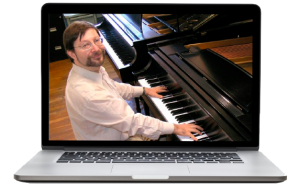
Explore the cultural influences and connections between composers as you focus on the music of the later Romanic period in this combination of lectures and sparkling piano performances by piano virtuoso Alex Tentser. Hear the work of Johannes Brahms, who was mentored by Robert Schumann and heavily influenced by Bach and Beethoven. Learn about the relationship of Edward Grieg and Franz Liszt, as you listen to performances of his piano compositions. Enjoy little known piano works by Peter Illich Tchaikovsky and discover the piano compositions of Nikolai Medtner, close friend of Sergei Rachmaninoff, a great representative of the Russian late Romantic piano tradition.
One 90-minute presentation will be released each Wednesday to be viewed at your convenience using the link provided.
Instructor: Alexander Tentser
Women on the Edge

The art and times of Lee Krasner, Elaine de Kooning, Joan Mitchell, Helen Frankenthaler and Grace Hartigan.
Mid-Century New York was the fast-moving center of the Modern Art movement and home to a remarkable community of experimental artists who would revolutionize the way we look at art. 5 women stood out in the predominately male group, for their talent, determination and guts. Follow their stories and learn their important works and legacy in five sessions covering the dozen years that marked the turning point in American Modern Art.
Week 1: Lee Krasner
Week 2: Elaine de Kooning
Week 3: Joan Mitchell
Week 4: Helen Frankenthaler
Week 5: Grace Hartigan
One 90-minute presentation will be released each Monday to be viewed at your convenience using the link provided.
Instructor:
Shakespeare’s Women

Shakespeare’s plays are full of extraordinary women: Portia, Cleopatra, Lady Macbeth, Beatrice, Juliet, Kate, Ophelia – the list goes on and on. We will explore several of these unique characters by reading scenes from the plays, watching recorded famous performances, and exploring other art inspired by the characters. Each class period will be devoted to at least two characters as we discover what is central to Shakespeare’s women.
One 90-minute presentation will be released each Friday to be viewed at your convenience using the link provided.
Instructor:
Turning the Page: Adventures for Bibliophiles

Make the most of time at home with a pair of armchair adventures fueled by intriguing non-fiction books selected to both enlighten and entertain. It is often said that truth is stranger than fiction. Join frequent Food for Thought host Paul Fisher for detailed introductions to non-fiction titles you may have missed and come away with a treasure trove of new information and inspiration for your own reading list.
Session 1: The Food Explorer by Daniel Stone
Meet David Fairchild, a young botanist and geologist at the turn of the century, with an insatiable lust to explore, who set out in search of foods that would enrich the American farmer and enchant the American eater. Along the way, he was arrested, fell ill, and bargained with island tribes (some cannibalistic). His adventures resulted in the most diverse food system ever created.
Session 2: Genghis Khan and the Making of the Modern World by Jack Weatherford
Join a host of characters as diverse as European and Russian knights, Papal envoys, Chinese navigators, Buddhist monks, devoted Mongol soldiers, Islamic scientists, Persian philosophers and merchants and follow the path of Genghis Khan from the heart of Mongolia, east to China and Japan, through Baghdad, west to Europe, south to India and Turkey, and north to Russia. By the time you’ve completed this expedition you’ll have a new appreciation of his lasting legacy.
One 45-minute presentation will be released each Friday to be viewed at your convenience using the link provided.
Instructor:
Spelunking through Prehistory: The Archaeology of Caves and Rockshelters

Caves and rockshelters preserve some of the most spectacular and important archaeological discoveries and are important archaeological resources worldwide. Chauvet-Pont-d’Arc (~30,000 years ago) and Lascaux Cave (~17,000 years old) preserve some of the earliest, and perhaps, most spectacular cave paintings ever discovered. Shanidar Cave provides a window into a 65,000-year-old Neanderthal burial, and Meadowcroft Rockshelter remains a pivotal archaeological site in the debate about the first Americans. Join us for a closer look at human prehistory to better understand how humans have interacted with caves and rockshelters for millions of years and consider why we are drawn to these deep, dark, places.
Meetings consist of a one-hour lecture and an optional 15-30 minutes after lecture for questions and discussion. Sessions will be recorded to enable on-demand viewing.
Optional Zoom Orientation: Jan 28, 10:00 – 10:30 am
Instructor:
The Early Renaissance in Europe
From darkness into light, or how one little competition changed the world.
At the beginning of the 14th Century in Europe, when Giotto completed The Arena Chapel, the new century was experiencing economic expansion and the renewed pursuit of intellectual and theological knowledge. The advent of Giotto’s new artistic style seemed to foreshadow great things to come. Instead, it was a century marked by fear and desperation. For most of the 14th century Europe walled itself up in a cocoon of self-defeating cynicism and recrimination. But then something amazing happened. In 1401 a competition was held in Florence that paved the way for the Renaissance in Italy and Northern Europe. It turned the disastrous 14th Century on its head and remade the world. Join us for a look at this remarkable period when so many new and newly rediscovered ideas came to the forefront. with artists such as Donatello, Masaccio, Ghiberti and Brunelleschi as well as the next generation including Piero della Francesca, Van Eyck, Ghirlandaio, Van der Goes, Verrocchio and Botticelli. What the artists in the 15-century accomplished allowed for the advent of the High Renaissance and beyond. Revered artists who followed, such as Leonardo, Michelangelo and Raphael, were truly standing on the shoulders of giants.
Week 1: Giotto and the seeds of the Renaissance; So much hope, until the buzz kill of the Black Death
Week 2: The Competition of 1401—Ghiberti triumphant, but what does when do when one loses? The unlikely Trio: Brunelleschi, Donatello, Masaccio
Week 3: The Next Generation or Where Do we Go from Here?
Week 4: Venice and The North–those quirky Venetians and those even more quirky Northerners
Week 5: Science, poetry and Prose: Let’s all go in different directions and collide in the middle.
Week 6: The Sistine Chapel: The clash, no collaboration of the Titans. Providing the foundation for the High Renaissance.
One 90-minute presentation will be released each Thursday to be viewed at your convenience, using the link provided.
Instructor: Kevin Justus
What the World Needs Now: Music as the Language of Love

Join Bob Bernhardt for a look at musical expression of love from the classics to the contemporary. Explore the music of love as written for the dance floor, the opera pit, the symphony stage, the cinema, and the gloriously varied world of the Beatles. From Prokofiev’s Romeo and Juliet, to Puccini’s La Boheme, to Rachmaninoff’s Symphony No. 2, to Lennon & McCartney’s She Loves You to Max Steiner’sTara from Gone with the Wind, we’ll listen to the music of love in every genre.
Week 1: Love at the Ballet
Week 2: Love at the Opera
Week 3: Love at the Symphony
Week 4: The Beatles in Love
Week 5: Love at the Movies
One 90-minute presentation will be released each Wednesday to be viewed at your convenience using the link provided.
Instructor:
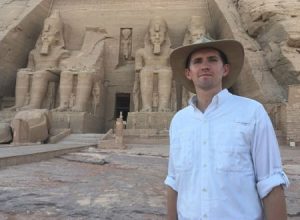
The Universe According to Ancient Egyptians

Meet Ra, the god of the sun and first pharaoh of the world, Osiris, the god of the underworld, Anubis who helped Isis create the first mummy and other Egyptian deities as you discover the pantheon of gods and goddesses who composed the rich tapestry of ancient Egyptian religious belief. Learn about the fundamental spiritual and supernatural concepts that linked together nearly four millennia of life along the Nile River.
Session 1: Intro to ancient Egypt and the Afterlife
Session 2: Nature of the Gods and Creation Myths
Session 3: Emergence of Religion and the Sun God
Session 4: Kingship, Osiris and the Sun God
Session 5: Amun and Atten
Instructor:
Black Poetry Lives: Contemporary Matters
Since early in America’s poetry, black poets have been active and crucial voices in the literary scene. Yet they have also been, for most of the nation’s history, underappreciated, sometimes even unseen. When Gwendolyn Brooks won the first Pulitzer Prize given to a black poet in 1955, it was a kind of culmination of a movement that included Langston Hughes and the Harlem Renaissance poets, and was at a time when some of these poets found a freeer and more appreciative home outside the USA. Since the late 1960s we have seen a consistent renewal and flow of black poetry, influenced by American culture, Afro-Caribbean themes and rhythms, the history of black people in the Americas, and diasporic histories from Africa. In recent years black poetry has both led and chronicled aspects of our moment, fraught in all its difficulty. Black lives certainly matter, and some of the matter they express has taken place in some of the most brilliant and innovative poetry of our time.
The course will combine presentation of recent poetry by black writers, including readings by the poets, and readings of their work; brief lectures; and time for discussion. Poets we will witness include major prize winners and underground voices, page explorers and vocal performers, poets ranging in age from 30 to 70. They are Claudia Rankine, Will Alexander, Erica Hunt, Tracie Morris, Tyehimba Jess, and giovanni singleton.
Instructor:
Chopin, Schubert, Schumann, Liszt
The Giants of Romantic Piano Music
Join pianist Alex Tentser for an exploration of the Golden Age of piano literature through the music of Chopin, Schubert, Schumann, and Liszt. In this series combining lectures with sparkling piano performances by the instructor, you’ll learn about the foundation of modern piano technique, the poetic, philosophical and spiritual influences of the composers, the origins of forms such as Impromptus, Preludes, Nocturnes and Ballades and more.
Instructor: Alexander Tentser
Broadway, Up with A Twist!
It’s happy hour with Richard Hanson and you’re invited!
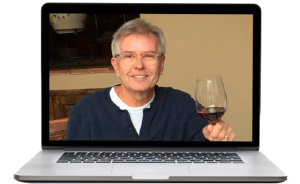
Each week sit back, relax and enjoy a cocktail with the composers of the Great American Songbook: George Gershwin, Irving Berlin, Cole Porter, Rodgers & Hart, Harold Arlen, and Frank Loesser. The way we party may have changed, but the music of the great tunesmiths of Broadway and Tin Pan Alley continue to be our comfort food. “They Can’t Take That Away From Me!” So, get out that cocktail shaker and R.S.V.P to reserve your table at Chez Hanson! In the words of Cole Porter, Broadway, Up with A Twist! will be De-Lovely
Session 1: It’s De-Lovely! Martinis with Cole Porter
Session 2: Blue Skies! Old Fashioneds with Irving Berlin
Session 3: Get Happy! French 75s with Harold Arlen
Session 4: My Funny Valentine! Gimlets w/ Rodgers & Hart
Session 5: Heart & Soul! Daquiris with Frank Loesser
Session 6: ‘S Wonderful! Manhattans with George and Ira Gerswhin
Instructor: Richard T. Hanson
In Search of the First Americans
Exploring Paleoindian Archaeology in North America
Discover the archaeology of Paleoindians in North America. Paleoindians are the first people in North America, and they entered the region by at least 14,000 years ago. Review the history of Paleoindian research in North America, to develop a foundation for understanding how the discipline has evolved with new methods and discoveries. Explore archaeological discoveries that address the question of when, where, and how people first migrated to North America. Examine at the different Paleoindian chronologies and cultures found in the archaeological record. Students will become familiar with the debates and current research concerning the first Americans and will develop an understanding of the regional variations that develop in the North American archaeological record between 14,000 to 9,000 years ago.
Optional Zoom Orientation: Oct 1, 10:00-10:30am
Instructor:
The High Renaissance in Italy
Leonardo, Michelangelo, Raphael and Titian

Leonardo, Michelangelo, Rafael and Titian innovated, explored, and transformed visual imagery, elevated the status of the artist, and created visual works that were equally beautiful and powerful. Yet, behind the images of this perfect world lay a world that was anything but. No matter what upheaval was happening in the world, the High Renaissance artists presented an idyllic and perfect world. In six lectures plus one interactive Zoom discussion, learn more about these four artists in their historical, social, and experiential context and their creation of monumental works of art.
Interactive Zoom discussion: Thursday, Nov 12, 10:00am AZ time
Instructor: Kevin Justus
Music for Our Time
Playlist for a Pandemic
In this time of challenge, we turn to music, our universal language, to find solace, encouragement, inspiration, and hope. Former Tucson Symphony Orchestra Music Director Bob Bernhardt will guide us through music selected to help us navigate these uncharted waters, as we find ourselves drawn together somewhere between physical distance and shared experience. The sessions end with a tribute to the life and music of the late, great film composer, Ennio Morricone.
Session 1: Music of Thankfulness and Gratitude
Session 2: Music of Introspection and Reflection
Session 3: Music of Joy and Triumph
Session 4: Music of Ennio Morricone
Instructor:
Romantic Poetry
William Blake & Percy Shelley
Blake & Shelley are both poets of overflow. In both short and long poems, Blake writes of the beauty and terror of the world and eventually constructs his own mythology (and angelology) as a way of both entering and transcending the world as he knows it. We will read selected short poems of Blake from “The Songs of Innocence and Experience,” move on to “The Marriage of Heaven and Hell,” and culminate with one of his extended visionary poems, “Jerusalem.” Along the way we will think of Blake as poet, visual artist, political thinker, and prophet. Get ready for a fiery and beautiful ride.
Percy Shelley is the most maligned of the Romantic poets, or at least he was for 20th Century followers of T.S. Eliot and the so-called “new critics” who wanted poems to be perfect “well-wrought urns”. Shelley makes us think of more contemporary poets who simply will not be contained. In poem after poem, Shelley and his language soar into the stratosphere as he seeks to plumb an imagination which has no limits. His thinking is deeply spiritual, but not Christian; his politics are liberationist; his lifestyle was unconventional, to say the least. We will read odes by Shelley, including his “Hymn to Intellectual Beauty,” “Ode to the West Wind,” and “To a Skylark,” his elegy to John Keats, “Adonais,” and one of his plays to gain an understanding of the depth and the expanse of his work.
The course will contain both lecture and discussion, as well as readings of the work.
Instructor:
Tucson’s Gift – The Music of Linda Ronstadt
The Music of Linda Ronstadt
Tucson native Linda Ronstadt is one of the best female vocalists of her era. Her songs are creative interpretations of the music of the great recording artists from the past and of her contemporaries. She shifted seamlessly between musical genres from rock to country to big band with unexpected turns including comic opera on Broadway and a collection of Mariachi ballads dedicated to her father. We will focus on both the original versions that inspired Linda and her own beautiful and masterful productions. In-class performances by singer and guitarist, Holly Jebb, plus a few singalong opportunities will add to the experience. Join John Nemerovski for an informative and entertaining presentation.
Instructor:
Ernest Hemingway & F. Scott Fitzgerald – Oro Valley Session
The Rise and Fall of a Friendship
Oro Valley Session
F, Scott Fitzgerald, already a popular author in America, first met Ernest Hemingway, a promising young writer, in April, 1925, at the Dingo Bar, rue Delambre in Paris over drinks. Their friendship was a roller-coaster relationship, fraught with differing emotions of fondness, respect, admiration, intimacy but also vanity, ego-gratification, and a powerful spirit of competition which lasted throughout the years up until Fitzgerald’s early death in 1940.
Matthew J. Bruccoli, in his scholarly Fitzgerald and Hemingway: A Dangerous Friendship (1994), states: “The mortality rate of literary friendships is high. Writers tend to be bad risks as friends– probably much for the same reason they are bad matrimonial risks. They expend the best parts of themselves in their work. Moreover, literary ambition has a way of turning into literary competition.”
In Jed Kiley’s Hemingway: A Title Fight in Ten Rounds, he quotes F. Scott Fitzgerald as saying about Hemingway: “He is a great writer. If I didn’t think so I wouldn’t have tried to kill him….I was the champ and when I read his stuff I knew he had something. So I dropped a heavy glass skylight on his head at a drinking party. But you can’t kill the guy. He’s not human.”
In his A Moveable Feast (1964), Hemingway writes about Fitzgerald’s gradual decline: “I saw him rarely when he was sober, but when he was sober he was always pleasant and he still made jokes about himself. But when he was drunk he would usually come to find me and, drunk, he took almost as much pleasure interfering with my work as Zelda did interfering with his. This continued for years but, for years too, I had no more loyal friend than Scott when he was sober.”
Join Dr. Bill Fry for this literary visit with friends Scott and Ernest as viewed from their works as well as from works by major scholars.
Instructor: William A. Fry
Women on the Edge
The Art and Times of Lee Krasner, Elaine de Kooning, Joan Mitchell, Helen Frankenthaler and Grace Hartigan.
Mid-Century New York was the fast-moving center of the Modern Art movement and home to a remarkable community of experimental artists who would revolutionize the way we look at art. Five women stood out in the predominately male group, for their talent, determination and guts. Follow their stories and learn their important works and legacy in a 3- session survey covering the dozen years that marked the turning point in American Modern Art. Guest speakers from the Tucson arts community.
Instructor:
Green Deal/ New Deal/ Real Deal
FDR, The new Deal and The World Crisis, 1932-1945
The New Deal continues to resonate in American life and politics. Proposals for a “Green New Deal” elicit howls of protest from opponents who see it as a misguided effort to expand “big government” and the “nanny state.” Proponents describe it as vital to mitigate climate change and economic inequality. Both sides of the argument often mis-remember or misunderstand what the “real” New Deal intended and achieved, at home and abroad during the tumultuous 1930s and 1940s. In four two hour meetings we will examine the collapse of the “old order,” the rise of FDR, the initially limited but eventually expansive economic and social agenda of the New Deal, creation of the New Deal political coalition, the movement’s impact on organized labor, the environment, popular culture, and minorities. We will explore the New Deal’s achievements and failures, and, finally, how U.S. participation in the Second World War shaped, limited, and expanded the New Deal at home and abroad.
Week 1: The Collapse of the Old Order
The interlocking global economic and political fractures that began in 1929 and quickly engulfed the entire world; the failure and inability of the U.S. government and its institutions to understand and respond creatively to the crisis. The “tragedy” of Herbert Hoover and the rise of Franklin Roosevelt and the “forgotten man.”
Week 2: The birth of the New Deal Order, 1932-1936
Creating a New Deal: Reinventing government and forging the structure of the welfare state. The role of Eleanor Roosevelt and her circle of feminist and labor activists. From emergency recovery programs to long-term solutions for agriculture, industry, banking and labor. Political battles, court packing, and compromised victories.
Week 3: The New Deal at High Tide, 1937-1940 Creating a liberal Supreme Court; the Fair Labor Standards Act; a New Deal for the Arts and popular culture; the conservative revolt against reform – creation of the Republican and Southern Democratic anti-New Deal coalition.
Week 4: The New Deal at War, 1940-1945.
The belated U.S. response to global aggression. Taking the U.S. into the world war. Dr. “Win -the-War in the White House, 1941-45. Liberalism abroad and the struggle for post-war justice; the economic bill of rights, the GI Bill, and the foundations of post-war liberalism at home.
Instructor: Michael Schaller
Ernest Hemingway & F. Scott Fitzgerald – Tucson Session
The Rise and Fall of a Friendship
Tucson Session
F, Scott Fitzgerald, already a popular author in America, first met Ernest Hemingway, a promising young writer, in April, 1925, at the Dingo Bar, rue Delambre in Paris over drinks. Their friendship was a roller-coaster relationship, fraught with differing emotions of fondness, respect, admiration, intimacy but also vanity, ego-gratification, and a powerful spirit of competition which lasted throughout the years up until Fitzgerald’s early death in 1940.
Matthew J. Bruccoli, in his scholarly Fitzgerald and Hemingway: A Dangerous Friendship (1994), states: “The mortality rate of literary friendships is high. Writers tend to be bad risks as friends– probably much for the same reason they are bad matrimonial risks. They expend the best parts of themselves in their work. Moreover, literary ambition has a way of turning into literary competition.”
In Jed Kiley’s Hemingway: A Title Fight in Ten Rounds, he quotes F. Scott Fitzgerald as saying about Hemingway: “He is a great writer. If I didn’t think so I wouldn’t have tried to kill him….I was the champ and when I read his stuff I knew he had something. So I dropped a heavy glass skylight on his head at a drinking party. But you can’t kill the guy. He’s not human.”
In his A Moveable Feast (1964), Hemingway writes about Fitzgerald’s gradual decline: “I saw him rarely when he was sober, but when he was sober he was always pleasant and he still made jokes about himself. But when he was drunk he would usually come to find me and, drunk, he took almost as much pleasure interfering with my work as Zelda did interfering with his. This continued for years but, for years too, I had no more loyal friend than Scott when he was sober.”
Join Dr. Bill Fry for this literary visit with friends Scott and Ernest as viewed from their works as well as from works by major scholars.
Instructor: William A. Fry
Shakespeare’s Women
Shakespeare’s plays are full of extraordinary women: Portia, Cleopatra, Lady Macbeth, Beatrice, Juliet, Kate, Ophelia – the list goes on and on. We will explore several of these unique characters by reading scenes from the plays, watching recorded famous performances, exploring other art inspired by the characters, and enjoying visits from Rogue Theatre actresses who have portrayed some of the characters. Each class period will be devoted to at least two characters as we discover what is central to Shakespeare’s women.
Instructor:
Day Trip – Phoenix Art Museum
The Schorr Collection at the Phoenix Art Museum
Join art historian Kevin Justus for a day trip to view the Schorr Collection at the Phoenix Art Museum. We’ll view the exhibit together, have lunch at Palette, the museum’s innovative farm-to-table restaurant and have time to view other areas of the museum on our own.
Since 1967, the Lewis family has carefully amassed what is now known as the Schorr Collection, named in honor of Hannah’s family, many of whom lost their lives in the Holocaust when Germany invaded her native Poland in 1939. Amassing several hundred paintings with more than half of the collection on long-term loan to institutions in the United Kingdom and abroad, the collection has become a musée imaginaire, or ‘museum without walls.’ The collection is not a chronological timeline of art history but rather highlights several stylistic movements across four hundred years of art in an effort to record and understand the human condition.
The collection began with works by leading French Impressionists. It soon progressed to include what is now the Schorr Collection’s strongest suit: Old Master paintings, with an emphasis on Caravaggism and Neo-Classicism. The other principal strength of the Schorr Collection lies in its grouping of 16th-century Flemish painting.
Instructor: Kevin Justus
Natural Wonders
Magnificent, Miraculous & Mysterious
We’re talking about the mushroom and the mollusk. Follow the unbelievable history and practices that have evolved in humans, fungi and snails. If your knowledge of mushrooms and mollusks, is from the kitchen and from pest control, you are likely to be shocked and amazed. For example, a fungi is the largest living organism on the planet and the genetic composition of mushrooms is actually more similar to humans than plants. Needless to say, some folk consider the mushroom to be magic. As for the snail, one of them was discovered in the British Museum, adhered to an ancient Egyptian stone artifact. One day it was gone. The search was on. They found it “rushing” for freedom. It had been dormant for 2000 years.
Instructor:
The Victorians and Modernity
The contradictory evidence regarding Victorian society as the first truly modern society will make up the primary focus of the course. The diverse issues faced by Great Britain between 1837 and 1901 will constitute the emphasis on how Britain solved (or not) them. These are issues with which the contemporary United States still struggles. We will examine issues that confronted Britain and how America still struggles to agree on policy concerning them. One columnist has suggested that the present administration seems intent on repealing the twentieth century. Whether this is true is a subject for impartial discussion. These issues cover imperial, foreign and domestic policies.
Week 1: Topics to start include: dealing with its international position as the foremost global power, science and evolution, the role of unions, free trade and tariffs, income inequality, maintaining economic competitiveness.
Week 2: Contrasting definitions of liberty, law and order, sexual mores, voting rights, defense spending, tax policies.
Week 3: Education for whom and at what cost?, religious debate, feminism and women’s rights, reproductive rights, poverty and urban decay, jobs, health care.
Week 4: Environmental challenges, historic preservation, local versus central government, refugee policies, trade deficits, social concerns and Poor Law criteria, governing the empire.
Instructor:
Walt Whitman
The Good Gray Poet at 200!
The bicentennial of Walt Whitman falls only 45 years after the bicentennial of the USA. Whitman has been with us almost as long as the red white and blue flag with stars. It seems time to look at Whitman in terms of what he wrote, what he thought, and how his words have remained with us. The poet of democracy, the poet of belief in westward expansion, the poet who said he contained multitudes, the poet who wept openly at the graves of Civil War soldiers. The poet who rose from the ranks of common Americans to be celebrated in his lifetime, but whose reputation also slipped after his death, revived by modernist poets who saw Whitman as an important precursor to the task of “making it new.” Whitman the free verse proponent whose long lines seem to come out of the Book of Ecclesiastes, Whitman the Romantic elegist who celebrated Abraham Lincoln in a poem of traditional form and meter, Whitman who called for an America that lived up to its initial promise of democracy for all.
In four sessions we will plunge deeply into that song of myself which becomes a song of all selves as we discuss this founding poet of American literature, perhaps the only such poet who allied himself so completely with the American dream.
Week 1: Body and Soul
A Consideration of the young Whitman.
Reading: Biographical Sketch, Starting from Paumanok, Song of Myself, I Sing the Body Electric
Week 2: Determined, Dared, Done
Whitman’s Poetry Middle to End
Reading: In Paths Untrodden, I Hear it was Charged against Me, Crossing Brooklyn Ferry, Song of the Exposition, Out of the Cradle Endlessly Rocking, As I Ebb’d with the Ocean of Life, When I Heard the Learn’d Astronomer, When Lilacs Last in the Dooryard Bloom’d, O Captain My Captain, Passage to India, To a Locomotive in Winter
Week 3: He Wrote Prose, Too!
Whitman’s Articulation of Ideas of Freedom, Progress, and Democracy
Reading: Preface to Leaves of Grass, Democratic Vistas, Selections from Specimen Days
Week 4: What We Made of Whitman
Ideas of Whitman from Dickinson, Woolf, Pound, Ginsberg, Creeley, Silliman, Conrad
Readings and Quotations (including from letters, poems, and essays): Pound’s sense of his “pact” with Whitman, Ginsberg’s sense of commonality and otherness with Whitman, Creeley’s spirit of the word, Silliman’s attempt a la Whitman to write everything, and Conrad’s call for a reexamination of Whitman’s ethics. A survey of Whitman’s reputation from dangerous and dark, to good and gray, to, simply, a classic.
Instructor:
Dance Fever! – Session 2
The Hollywood Dance Machine
Choose from 2 Sessions
Session 1
Session 2
Join Richard Hanson for a celebration of the greatest dance sequences in the history of the Hollywood Movie Musical. For almost 100 years, the Hollywood Dream Machine showcased the greatest dancers of the 20th Century, who fired the imagine of audiences who sat in the dark, watching celluloid images leap and spiral on the silver screen. Dance Fever! explores the rich history of dance in movie musicals.
We’ll honor the directors, choreographers, and stars who made the movies dance. Join the Gold Diggers as they Shuffle off to Buffalo at Warner Bros! Thrill as Fred & Ginger dance Cheek To Cheek at RKO! Marvel as the queens of tap Ann Miller and Eleanor Powell shim-sham across mirrored dance floors. Bow down as the Nicholas Brothers defy gravity. Salute Jimmy Cagney tappin’ away in Give My Regards to Broadway. Cheer Gene Kelly Singin’ in the Rain during the golden years of MGM!
Peek behind the screen into the soundstage and explore the creative process of the Hollywood choreographer and dancer. Revel in Busby Berkeley’s Lullaby of Broadway in 42nd St., Michael Kidd’s Raising the Barn in Seven Brides for Seven Brothers, Jerome Robbin’s The Small House of Uncle Thomas in The King and I, Agnes de Mille’s glorious Dream Ballet in Oklahoma, Bob Fosse’s All That Jazz, John Travolta’s tearing the dance floor up in Saturday Night Fever and Gene Kelly’s masterpiece, the An American In Paris ballet.
The movie musical also preserved a visual history of social dance. From the Minuet to the Waltz, the Turkey Trot to the Charleston, the Jitterbug to the Hand Jive, the Twist to the Mashed Potato, or the Conga to the Funky Chicken, social dance leapt from the ball room to the screen. These film treasures show how America danced through the decades.
So, put on your dancin’ shoes and join Cyd Charisse, Gregory Hines, Bob Hope, Leslie Caron, Ruby Keeler, Jacques d’Amboise, Russ Tamblyn, Moira Shearer, Patrick Swayze and a cast of thousands in a Gotta Sing! Gotta Dance! extravaganza that salutes the glorious Hooray for Hollywood world of musical movie dance.
“Come and meet those dancing feet
On the avenue I’m taking you to
Forty-Second Street!”
– Harry Warren/Al Dubin (1933)
Instructor’s Note: Dance Fever! is the second in a series of You Asked For It! classes. Dance Fever! was inspired by a 2018 Washington Post article, The 31 Best Dance Scenes in Movies which was given to me by Jill Drell. Thank you, Jill!
Instructor: Richard T. Hanson
Dance Fever! – Session 1
The Hollywood Dance Machine
Choose from 2 Sessions
Session 1
Session 2
Join Richard Hanson for a celebration of the greatest dance sequences in the history of the Hollywood Movie Musical. For almost 100 years, the Hollywood Dream Machine showcased the greatest dancers of the 20th Century, who fired the imagine of audiences who sat in the dark, watching celluloid images leap and spiral on the silver screen. Dance Fever! explores the rich history of dance in movie musicals.
We’ll honor the directors, choreographers, and stars who made the movies dance. Join the Gold Diggers as they Shuffle off to Buffalo at Warner Bros! Thrill as Fred & Ginger dance Cheek To Cheek at RKO! Marvel as the queens of tap Ann Miller and Eleanor Powell shim-sham across mirrored dance floors. Bow down as the Nicholas Brothers defy gravity. Salute Jimmy Cagney tappin’ away in Give My Regards to Broadway. Cheer Gene Kelly Singin’ in the Rain during the golden years of MGM!
Peek behind the screen into the soundstage and explore the creative process of the Hollywood choreographer and dancer. Revel in Busby Berkeley’s Lullaby of Broadway in 42nd St., Michael Kidd’s Raising the Barn in Seven Brides for Seven Brothers, Jerome Robbin’s The Small House of Uncle Thomas in The King and I, Agnes de Mille’s glorious Dream Ballet in Oklahoma, Bob Fosse’s All That Jazz, John Travolta’s tearing the dance floor up in Saturday Night Fever and Gene Kelly’s masterpiece, the An American In Paris ballet.
The movie musical also preserved a visual history of social dance. From the Minuet to the Waltz, the Turkey Trot to the Charleston, the Jitterbug to the Hand Jive, the Twist to the Mashed Potato, or the Conga to the Funky Chicken, social dance leapt from the ball room to the screen. These film treasures show how America danced through the decades.
So, put on your dancin’ shoes and join Cyd Charisse, Gregory Hines, Bob Hope, Leslie Caron, Ruby Keeler, Jacques d’Amboise, Russ Tamblyn, Moira Shearer, Patrick Swayze and a cast of thousands in a Gotta Sing! Gotta Dance! extravaganza that salutes the glorious Hooray for Hollywood world of musical movie dance.
“Come and meet those dancing feet
On the avenue I’m taking you to
Forty-Second Street!”
– Harry Warren/Al Dubin (1933)
Instructor’s Note: Dance Fever! is the second in a series of You Asked For It! classes. Dance Fever! was inspired by a 2018 Washington Post article, The 31 Best Dance Scenes in Movies which was given to me by Jill Drell. Thank you, Jill!
Instructor: Richard T. Hanson
The Master and the Millionairess – Oro Valley Session
The Friendship of Edith Wharton and Henry James
Oro Valley Session
Edith Jones Wharton (1862-1937) was a millionairess of impeccable Old New York pedigree (“Keeping up with the Joneses” originated with her wealthy family). She was beginning her literary career when she first met Henry James (1843-1916) who was from a distinguished academic family and already an acclaimed American novelist. These two literary figures who portray the lifestyles of the rich and famous of the late 19th century became the closest of friends for many years – until Henry’s death in England in 1916.
Edith nicknamed Henry “The Master” and Henry nicknamed Edith “The Millionairess.” These two award-winning authors are considered the masters of literary realism in America in a period Mark Twain called “the Gilded Age”.
Wharton and James spent long periods visiting each other in both America and Europe and influencing each other’s novels and short stories depicting the difference between American and European cultures.
Please join Dr. Bill Fry for a glimpse into the powerful friendship that both Wharton and James considered one of the most important in their lives.
Instructor: William A. Fry
World Archaeology
From Hunters and Gatherers to the Atomic Age
Trace the development of human culture after their emergence from Africa and entrance to the Americas. Students of Tracking the Footsteps of Humanity will get the “rest of the story” as modern humans spread throughout the globe, commit to agriculture, and establish global civilizations. Students that have not taken Tracking the Footsteps of Humanity, will have no problem jumping into the story as people begin to settle down on a global scale. The course will introduce archaeological and anthropological methods, theory, and findings through the lens of 7 broad topics. Class meetings include lecture, discussion, and readings.
Week 1: Introduction to Archaeology
Week 2: Complex Hunters and Gatherers
Week 3: Domestication
Week 4: Origins of Complexity
Week 5: Archaeology of Food and Fermentation
Week 6: Archaeology of Warfare and Violence
Week 7: Archaeology of the Modern World
Instructor:
Beethoven as a Bridge to Romanticism
Ludwig van Beethoven, one of the greatest composers in music history, was inspired by the philosophical and moral principles developed by the Enlightenment.
Beethoven’s evolution as a composer takes us from the height of musical classicism, exemplified by Mozart’s mature works, to early German Romanticism. Beethoven wrote his beautiful and innovative late string quartets and piano sonatas despite his near deafness. In fact, because of his deafness, during his last creative surge Beethoven tapped into a unique world of his own. He soared into completely uncharted territories, unencumbered by any musical influences and guided only by his unique fantasy and intuition.
We will follow Beethoven’s progress as a composer from the “heroic” phase of his creative life, which includes his Symphonies #3 and #5, his piano sonata “Appassionata” and other works, to his late piano sonatas and Symphonies #6 and #9.
Enjoy in-class performances of Beethoven’s most popular piano sonatas – “Pathetique,” “Moonlight,” “Waldstein,” “Appassionata,” and other less known sonatas, plus early Romantic compositions by Schubert and Schumann, and late Romantic pieces by Brahms.
Instructor: Alexander Tentser
The Master and the Millionairess – Tucson Session
The Friendship of Edith Wharton and Henry James
Tucson Session
Edith Jones Wharton (1862-1937) was a millionairess of impeccable Old New York pedigree (“Keeping up with the Joneses” originated with her wealthy family). She was beginning her literary career when she first met Henry James (1843-1916) who was from a distinguished academic family and already an acclaimed American novelist. These two literary figures who portray the lifestyles of the rich and famous of the late 19th century became the closest of friends for many years – until Henry’s death in England in 1916.
Edith nicknamed Henry “The Master” and Henry nicknamed Edith “The Millionairess.” These two award-winning authors are considered the masters of literary realism in America in a period Mark Twain called “the Gilded Age”.
Wharton and James spent long periods visiting each other in both America and Europe and influencing each other’s novels and short stories depicting the difference between American and European cultures.
Please join Dr. Bill Fry for a glimpse into the powerful friendship that both Wharton and James considered one of the most important in their lives.
Instructor: William A. Fry
Edouard Manet
The Impressionists and the Creation of a Modern Vision
Manet is arguably one of the most important painters in the history of art. But for all his celebrity, and for all those who claim him to be their own, he is remarkably difficult to categorize or pin down. Manet would have preferred this. Opinionated, cantankerous, protective of his talent and his own mythology, Manet would exert a profound influence on the artists who were his contemporaries and those of the younger generation. This series of lectures will look at Manet and his works in the historical context of the French Second Empire and the Third Republic and show why the younger generation of Impressionists, including Monet, Renoir and Pissaro, would embrace some of Manet’s artistic theories and reject others, keeping Manet close but separate. The solitary and individualistic Manet preferred it no other way.
Week 1: Introduction: France in the 19th Century. Political and Artistic upheaval, the French Academy in Crises and the Avant-garde— the Specter of David. Delacroix, Ingres, Courbet, Millet and the young Manet.
Week 2: Manet and the Art Establishment–venturing into shark-filled waters. But when one is a shark, one knows what to do. Patronage, the State, the official Salon and the desire for legitimacy.
Week 3: The young Impressionists, succeeding on the coattails of Manet? “Who is this Monet whose name sounds just like mine and who is taking advantage of my notoriety?”
Week 4: The lone lion.
Manet at the end of the 19th Century: Acerbically beautiful comments on the harsh reality of contemporary life. Un bar aux Folies Bergère. The idealism and escapism of the Impressionists.
Week 5: The State of the Art before the War. Fragmentation and contention: The Post-Impressionists engage the legacy of Manet while the Impressionists dissolve into the color and light of denial.
Week 6: The End of the World and the Ideal of Beauty Dims. Late Monet and Renoir – escaping into color or reestablishing form. The reaction against Impressionism, a different Modernism and the Triumph of Manet.
No class Feb 17
Instructor: Kevin Justus
Walt Whitman
The Good Gray Poet at 200!
The bicentennial of Walt Whitman falls only 45 years after the bicentennial of the USA. It seems time to look at Whitman in terms of what he wrote, what he thought, and how his words have remained with us. The poet of democracy, the poet of belief in westward expansion, the poet who said he contained multitudes, the poet who wept openly at the graves of Civil War soldiers. Whitman the free verse proponent whose long lines seem to come out of the Book of Ecclesiastes, Whitman the Romantic elegist who celebrated Abraham Lincoln in a poem of traditional form and meter, Whitman who called for an America that lived up to its initial promise of democracy for all.
In four sessions we will plunge deeply into that “song of myself” which becomes a song of all selves as we discuss this founding poet of American literature.
Week 1: Body & Soul – Overview of the young Whitman
Reading: Biographical Sketch, Starting from Paumanok, Song of Myself, I Sing the Body Electric
Week 2: Whitman’s Poetry Middle to End
Reading: In Paths Untrodden, I Hear it was Charged against Me, Crossing Brooklyn Ferry, Song of the Exposition, Out of the Cradle Endlessly Rocking, As I Ebb’d with the Ocean of Life, When I Heard the Learn’d Astronomer, When Lilacs Last in the Dooryard Bloom’d, O Captain My Captain, Passage to India, To a Locomotive in Winter
Week 3: He Wrote Prose, Too! – Whitman’s Articulation of Ideas of Freedom, Progress, and Democracy
Reading: Preface to Leaves of Grass, Democratic Vistas, Selections from Specimen Days
Week 4: What We Made of Whitman – Ideas of Whitman from Dickinson, Woolf, Pound, Ginsberg, Creeley, Silliman, Conrad
Readings and quotations from letters, poems, and essays. A survey of Whitman’s reputation from dangerous and dark, to good and gray, to, simply, a classic.
Instructor:
Literary Road Trip – Oro Valley Session
American Voices
Join Bill Fry for an eight-week exploration of stories and poetry that illustrate the American experience from a variety of vantage points. Starting on a sheep farm in Oregon and moving through Michigan, Minnesota, Ohio, New Mexico, New York and more, we’ll read works with a well-developed sense of place as we focus on uniquely American voices in literature.
Week 1: Scottie Jones – Country Grit (2017), a memoir of an experiment with sheep farming in Oregon
Week 2: Theodor Dreiser – Come Into My Parlor (1918), a novella set in Long Island
Week 3: Ernest Hemingway – “Up in Michigan” (1925)
Week 4: Willa Cather – “The Enchanted Bluff” (1909), a short story set in New Mexico
Week 5: Sinclair Lewis – Main Street (1920), a novel set in Minnesota
Week 6: Robert Frost – Selected poetry (1913-1915) set in New England
Week 7: William Dean Howells – “Editha” (1905), a short story set in Ohio
Week 8: O.Henry – “The Cop and the Anthem” and “The Gift of the Magi” (both published in 1906), two stories set in New York City
Instructor: William A. Fry
The History of Parliament
The Parliament of the United Kingdom has remote origins that stretch back into British history. It has evolved over the centuries into the governing body of the UK, regarded as the mother of parliaments. The institution has become a primary identifier of national identity, one that now considers all aspects of British life. The history of Parliament is in many ways the history of the United Kingdom itself.
Week 1: Medieval Origins
Parliament originated from the tensions within feudal relationships. Norman bodies such as the curia regis and the magnum concilium were forerunners of parliamentary development as was the sealing of Magna Carta in 1215. By the middle of the 13th century English society had started the long road to the 21st century parliament.
Week 2: Early Modern Parliaments
In the 15th and 16th centuries Parliament cemented its position as a fundamental part of the constitution. But what exactly did it do? Were its functions political, administrative, military, judicial or legislative? The Tudors (1485-1603) attempted to make Parliament ‘a creature of the monarch’, a role increasingly resented by members.
Week 3: The Sovereignty of Parliament
The Stuart century (1603-1714) settled once and for all who was to govern: the king or Parliament. The ‘struggle for the constitution’ resulted in turmoil that eventually led to the English Civil war (1642-1660) when both the monarchy and Parliament disappeared. The Restoration (1660-1688) restored the crown’s power until the Glorious Revolution (1688-89) settled the question for good. Parliamentary sovereignty became the centerpiece of the modern British constitution.
Week 4: The Modern Parliament
Since 1689 Parliament has gradually established its place as the key institution of the modern constitution. The greatest accomplishment occurred when Parliament obtained the power to tell the monarchs what he/she must do supplanting its original authority of simply telling the monarch what he/she could not do. The EU and Brexit is simply the latest in a long line of issues that Parliament must resolve.
Instructor:
The Footprints of Humanity
Perspectives from Archaeology and Paleoanthropology
Paleoanthropologists have tracked the story of human evolution through over 7 million years, by following the archaeological evidence of human development. The story begins with our large bodied Miocene apes in Africa, traces the origins of bipedalism and cognitive expansion, and then follows human expansion out of Africa and into the rest of the world and beyond. We will cover seven major topics in 2-hour meetings, focusing on major discussions within paleoanthropology. Topics include understanding evolution, early hominids and the origin of bipedalism, cooking and anatomy, early migrations, art and cave paintings, the peopling of the Americas, and recent discoveries that are changing how we understand the development of modern humans.
Week 1: Understanding the Evolutionary Process and Origin of Species
Modern Evolutionary Biology – We will cover the basics of Darwinian evolution, and current research that help us understand how evolutionary forces mold species.
DNA – The second hour will focus on DNA studies that are illuminating paleoanthropology. We will briefly look at theory, methods, and findings from this area of paleoanthropological research.
Week 2: Early Hominids and the Origin of Bipedalism
Ardipithecus Group and Early Hominids – We will examine some of the earliest fossils in the hominin lineage, discuss significant changes in the skeletal anatomy, and discuss what this suggests us about the behavior of each species.
Origins of Bipedalism – The second hour will focus on theories on the origin of our unique form of locomotion. We will look closely at the evidence and potential links between past environmental change and hominin evolution.
Week 3: Cooking, Technology, Modern Human Anatomy
The Cooking Ape – Desmond Morris famously dubbed modern humans “the Naked Ape” and since then, others have employed similar labels. Here we will explore a theory that connects human digestive anatomy to cooking and to increases in cognitive ability.
The Archaeology of Food – In this second hour, we will examine how archaeologists and paleoanthropologists learn about past diets. We will discuss several methods employed in the exploration of past food systems and look at some findings from this research.
Week 4: Early Travelers
The Travels of Homo Erectus – We will look at the expansion of hominins from Africa into the rest of the world and discuss some of the theories and important sites associated with this first migration and expansion.
Expansion of Homo sapiens neanderthalensis and Homo sapiens sapiens – In the second hour, we will look at the expansion of modern humans and Neanderthals in the upper Paleolithic, including the timing and evidence of this migration.
Week 5: Development of Artwork and Cave Paintings
The Upper Paleolithic – In the Upper Paleolithic we see an explosion of new technologies as modern humans move into new ecosystems. We’ll focus on these technological developments and discuss ideas about the interaction between hominin species, as modern humans move into inhabited landscapes.
Cave Paintings, Rock Art, and the Creative Human Mind – In the second hour, we will look more closely at the expansion and development of art in the archaeological record. We will spend time with the famous cave sites, Lascaux and Chauvet Cave, and discuss the importance of the development of art.
Week 6: Expansion into the Americas
Clovis First – The peopling of the Americas is a lively topic in Archaeological research. Learn the history of the research and the development of major theories about the timing, route, and source of the first Americans.
Pre-Clovis Research – In the second hour, we will look at the current research on the peopling of the Americas, discuss major findings and new discoveries, and explore how these findings change our understanding of human expansion into the Americas.
Week 7: Recent Developments in Paleoanthropology
New Species – In this final section, we will discuss new findings that are dramatically changing the way we think about human evolution and explore the new species discovered over the past few years.
Stones, Bones, and Wrap Up – In the second hour, we will continue to talk about recent developments and talk about the implications for future research on the origins of modern humans.
Instructor:
Literary Road Trip – Tucson Session
American Voices
Join Bill Fry for an eight-week exploration of stories and poetry that illustrate the American experience from a variety of vantage points. Starting on a sheep farm in Oregon and moving through Michigan, Minnesota, Ohio, New Mexico, New York and more, we’ll read works with a well-developed sense of place as we focus on uniquely American voices in literature.
Week 1: Scottie Jones – Country Grit (2017), a memoir of an experiment with sheep farming in Oregon
Week 2: Theodor Dreiser – Come Into My Parlor (1918), a novella set in Long Island
Week 3: Ernest Hemingway – “Up in Michigan” (1925)
Week 4: Willa Cather – “The Enchanted Bluff” (1909), a short story set in New Mexico
Week 5: Sinclair Lewis – Main Street (1920), a novel set in Minnesota
Week 6: Robert Frost – Selected poetry (1913-1915) set in New England
Week 7: William Dean Howells – “Editha” (1905), a short story set in Ohio
Week 8: O.Henry – “The Cop and the Anthem” and “The Gift of the Magi” (both published in 1906), two stories set in New York City
Instructor: William A. Fry
Caravaggio and Annibale Carracci
The Heart and Mind of Early Baroque
The world exalts Caravaggio for his dramatic light and intense naturalism whereas Annibale Carracci is little known, for his ideal beauty and energized classicism. Why has one become a towering figure of the Western Canon and the other only appreciated by students and specialists of the Italian Baroque? These two contemporaries approached the reform of painting at the end of the Sixteenth Century from entirely different directions. Discover how the intensity of Caravaggio and the sensuality of Annibale Carracci converged to create and influence all the glories and excesses of the Baroque and discuss how their works remain powerful and relevant today.
Week 1: The Italy of the Counter Reformation and the need for Reform – The Rome of the late Sixteenth Century. What is old is new again. The Bolognese Academy of Painting of Annibale Carracci and the early Career of Caravaggio.
Week 2: The Early Baroque in Rome – Caravaggio in the circle of Cardinal Francesco Maroia Del Monte and the erotics of Faith. The Saint Matthew Cycle in the Contarelli Chapel for the Church of San Luigi dei Francesi.
Week 3: Annibale Carracci and the Palazzo Farnese – Glorious Classicism and Wondrous Sensualism. The establishment of Baroque Ceiling Painting and the desire for Fame….but with a sense of humor.
Week 4: Rome in 1601 – Drama, drama, and more drama. Annibale and Caravaggio collaborate to create the Cerasi Chapel in Santa Maria del Popolo. The establishment of an artistic tradition.
Week 5: When Titans Fall – The late careers of Carracci and Caravaggio, still brilliant but falling into melancholia and violence. The profound influence of Annibale and Caravaggio on younger artists and formation of the Baroque ideal.
Instructor: Kevin Justus
Exploring Egypt’s Influential Neighbor
The Archaeology and History of Ancient Nubia
Discover Nubia, the “silent partner” to ancient Egypt’s grandeur. The source of technologies, raw goods (e.g., gold), mercenaries, and considerable interconnections, Nubia shaped ancient Egypt far more extensively than is generally understood. Meanwhile, Nubia supported several powerful, independent, millennia-long kingdoms of its own, including the Kerma and the Kush. Across five lectures, organized chronologically, we will explore the sites that were most critical to the development of ancient Nubian civilizations and have yielded its most spectacular discoveries. The archaeological and textual evidence and their importance are explained. Emphasis will be on the Kerma culture (ca. 2500-1500 BC), the 25th Dynasty/Napatans (ca. 900-300 BC), and the Meriotic kingdom (ca. 300 BC to AD 300).
Week 1: Introduction to Ancient Egypt & Nubia
Week 2: Nubia in the Beginning
Week 3: The Kerma Period
Week 4: The Kingdom of Kush
Week 5: The Pyramids and Royal Cemeteries of Nuri
Professor Creasman’s exciting work at the royal pyramids of Nuri has recently been featured by National Geographic:
- Read more about his underwater archaeology work at https://www.nationalgeographic.com/culture/2019/07/dive-ancient-pyramid-nuri-sudan/
- Download a podcast episode called “Scuba Diving in a Pyramid” from the Overheard at National Geographic
podcast site https://www.nationalgeographic.com/podcasts/overheard
Check your local listings for a National Geographic television documentary about the “Black Pharoahs” which will include several projects in ancient Nubia.
Instructor:
Friendship of Hawthorne & Melville – Oro Valley Session
In an 1851 letter to Nathaniel Hawthorne, Herman Melville wrote: “When the big hearts strike together, the concussion is a little stunning.” In his book, Double Lives: American Writers’ Friendships, Richard Lingerman puts forth the opinion that the friendship of Nathaniel Hawthorne and Herman Melville is one of the most important in the nation’s literary history. It came at a crucial time in both men’s careers. Melville was writing Moby Dick and the success of Hawthorne’s recently published The Scarlet Letter had won him a long-delayed emergence from obscurity. Until Melville and Hawthorne published their great novels, there was no serious American literature.
These two giants of American literature met in August of 1850, at a picnic in the Berkshires in western Massachusetts. Their lives were changed forever. Join Dr. Bill Fry for a four-week exploration of this friendship and its impact on American literature.
Instructor: William A. Fry
Friendship of Hawthorne & Melville – Tucson Session
In an 1851 letter to Nathaniel Hawthorne, Herman Melville wrote: “When the big hearts strike together, the concussion is a little stunning.” In his book, Double Lives: American Writers’ Friendships, Richard Lingerman puts forth the opinion that the friendship of Nathaniel Hawthorne and Herman Melville is one of the most important in the nation’s literary history. It came at a crucial time in both men’s careers. Melville was writing Moby Dick and the success of Hawthorne’s recently published The Scarlet Letter had won him a long-delayed emergence from obscurity. Until Melville and Hawthorne published their great novels, there was no serious American literature.
These two giants of American literature met in August of 1850, at a picnic in the Berkshires in western Massachusetts. Their lives were changed forever. Join Dr. Bill Fry for a four-week exploration of this friendship and its impact on American literature.
Instructor: William A. Fry
In Search of the First Americans
Exploring Paleoindian Archaeology in North America
This course is an introduction to the archaeology of Paleoindians in North America. Paleoindians are the first people in North America and they entered the region by at least 14,000 years ago. We’ll begin by reviewing the history of Paleoindian research in North America, to develop a foundation for understanding how the discipline has evolved with new methods and discoveries. We will explore archaeological discoveries that address the question of when, where, and how people first migrated to North America. The course will then take a regional approach to explore the different Paleoindian chronologies and cultures found in the archaeological record. Regions covered will include the Northeast, Southeast, High Plains and Rocky Mountains, Southwest, the Great Basin, West Coast, and Alaska. Students will become familiar with the debates and current research concerning the first Americans and will develop an understanding of the regional variations in the North American archaeological record between 14000 and 9000 years ago.
Instructor:
World War 1
1919 – Peacemaking after the Great War
The Great War had finally ended but how to deal with Germany and the other defeated nations remained a major issue. Britain and France believed in a reparations settlement whereby Germany would pay for the cost of the war. In the two months between the armistice and the opening of the Versailles peace conference, political and social instability had swept across
Europe. Would it be possible to conciliate Germany, fend off Bolshevism and restore peace and order to the continent? The Versailles Conference did not permit the defeated nations to participate in the proceedings, for they simply had to accept the terms upon which the Allies had agreed. In addition, other Treaties tried to make the peace with Austria, Bulgaria, Hungary and Turkey. The consequences of these activities have remained controversial for a century and whether Versailles led to World War II in two decades is still a matter of debate.
Week 1: The Immediate Aftermath of the War
In all the combatant nations the armistice ushered in demands for profound political and social change that challenged the established order. In Germany, for example, the birth of the Freikorps movement (and attempts at revolution by workers following the Russian model) provoked unrest and in some cases violence. Returning to peacetime economies required major adjustments just as soldiers were being demobilized. The situation required high levels of statesmanship on the part of the Big Four: Clemenceau of France, Lloyd George of Great Britain, Orlando of Italy and Wilson of the United States.
Week 2: The Versailles Treaty
The Treaty first established the League of Nations, a goal much desired by President Woodrow Wilson but destined to be rejected by the United States. The next major issue was that of reparations. From the beginning many economists thought that reparations would place an undue burden on Germany and prevent her from gaining any measure of recovery. That in turn would diminish the economies of the victorious Allies. The most famous (or infamous) article in the treaty was 231, which placed sole responsibility for the outbreak of hostilities on Germany. She also lost her colonies and territories that contained German-speaking minorities. Germany also lost her High Seas fleet and was restricted in the size of her army. Too vindictive or too lenient has remained the primary question.
Week 3: The Minor Treaties
There were four additional Treaties that complemented the Versailles Treaty. These made a separate peace with Austria, Bulgaria, Hungary and Turkey. The provisions involved the transfer of territories and populations of the defunct Hapsburg and Ottoman Empires from the losers to the victors. Turkey never accepted her treaty and fought a long war with Greece that lasted until 1922. The articles contained in these Treaties were always bitterly resented by the losers who saw the principle of self-determination violated at almost every turn. The conditions imposed on the losers rarely led to reconciliation and always led to continuing resentment.
Week 4: The Legacy
Only two decades separated the two World Wars. The Versailles Treaty has always attracted criticism for its role in this outcome. The high ideals brought to the conference and their betrayal by one or more of the Allies remain conduct hard to justify in retrospect. The fear of Bolshevik Russia underlay the feelings of both the victors and the losers. The Treaty no doubt framed a context for what followed, but whether it was a cause still is debated.
Instructor:
A Tribute to Leonard Cohen
Over a musical career that spanned nearly five decades, Leonard Cohen wrote songs that addressed — in spare language that could be both oblique and telling — themes of love and faith, despair and exaltation, solitude and connection, war and politics. A hugely influential and critically acclaimed singer and songwriter, Cohen released fourteen studio albums between 1967 and 2016, the last being You Want It Darker, the title track of which posthumously won him the Grammy for Best Rock Performance. He was inducted into the Rock and Roll Hall of Fame in 2008 and the Songwriters Hall of Fame in 2010 and was honored with a lifetime achievement award at the 2010 Grammys. He won both the Prince of Asturias Award for Literature and the Glenn Gould Prize in 2011, and the first PEN New England Song Lyrics of Literary Excellence Award in 2012. Cohen died in Los Angeles on November 7, 2016. More than 2,000 recordings of his songs have been made, initially by the folk-pop singers who were his first champions, like Judy Collins and Tim Hardin, and later by performers from across the spectrum of popular music, among them U2, Aretha Franklin, R.E.M., Jeff Buckley, Trisha Yearwood and Elton John.
Instructor:
The Paradoxical Venetian Renaissance
The 16th-century Venetians proudly saw themselves as different and apart, and in many ways culturally superior to their sister city-states on the Italian mainland. How could they not; their remarkable city floated, cloud-like and ethereal, on the lagoons of the Adriatic? This remarkable occurrence of building a city on water with canals, instead of streets, created a city filled with color and light. Florence, Milan or Rome just could not compete.
The venerable Venetian republic encouraged a Christian ethos of charity and responsibility paired with a love of ceremony and sumptuous display. This often ran counter to the wishes and dictates of the Holy Father in Rome, frequently bringing the Venetians in direct conflict with their Italian brothers and sisters. This fierce independence, theologically, politically and culturally, blended with the remarkable history and incredible wealth of Venice to foster the sumptuous and sensual artistic atmosphere of the Most Serene Republic. Through artists, such as Giovanni Bellini, Giorgione, Titian, Tinteretto and Veronese, Venice, this city married to Christ and the Sea, created one of the most spiritually powerful but sensually charged visual traditions, but also one of the most brilliant and long lasting artistic movements in the Western Canon.
Week 1: Introduction
Background and what is it about Venice? The European World in 1400.
Week 2: 15th-century Developments
Venice, its history and Giovanni Bellini – the City at the Cross-Roads of the World.
Week 3: Into the 16th-century
Titian – a most precocious talent. The Frari and the Triumph of Color and Light
Week 4: Titian – the Most Popular Painter in Europe
Painter to Kings, Popes and an occasional Duke. Venetian Power through Art.
Week 5: Tinteretto and Veronese
The younger generation and the continuation of a tradition. How does one compete with Titian?
Week 6: The Party is over, or is it just beginning?
Late Titian and the younger generation comes into its own. The decoration of the Venetian Scuola. Triumph and Controversy – the rush to the Baroque.
Instructor: Kevin Justus
Literary Cocktail Hour with Bill Fry
Word Play: The little-known origins of common phrases and expressions
Join Bill Fry and his guest Neil Deppe for an enlightening exploration of colloquial expressions and figures of speech during cocktail hour at the lovely Hacienda del Sol Guest Ranch Resort. We’ll have some fun with the English language and discover where, how and with whom some of our popular sayings originated. Proceeds from this event will support Make Way for Books, an early literacy nonprofit organization whose mission is to give all children the chance to read and succeed.
Instructor: William A. Fry
Ovid’s Metamorphoses
A Roman Poet Weaves Greek Mythology
Besides being one of the best ancient anthologies of Greek Mythology, Ovid’s Metamorphoses masterfully presents these tales in a complex poetic framework. With transformation as the main unifying theme, Ovid weaves together tales of world creation, activities of gods and heroes that end with events of his own time. Connecting these diverse tales are recurrent motifs of characters—such as deities Minerva and Apollo; themes—gods’ punishment of human wrongs, improper sexual desires, heroic deeds, more; and storytelling ties among the tales. Ovid masterfully presents his mythological epic with poetic innovation, making it significant in his own time.
Ovid’s imaginative lens enhances these tales with this one Roman’s creative interpretation, which offers modern readers a nuanced, multi-textured appreciation of these ancient tales.
Selections from Ovid’s Metamorphoses, will be recommended to enhance students’ understanding and appreciation of the topic, but such reading is not required.
We will read selections from the indicated books (poem divisions) that best exemplify the themes and storytelling of the poem.
Week 1: Books 1-2
Creation of the world, human beings
Week 2: Books 3-5
Early human activities, god-human interactions
Week 3: Books 6-8
Heroes; male and female wrongdoers
Week 4: Books 9-10
More heroes; love gone awry
Week 5: Books 11-13
Troy and its aftermath
Week 6: Books 14-15
Aeneas, Rome, Pythagoras, contemporary
Instructor:
As Time Goes By… – Session 2
The Forgotten Tunesmiths of The Great American Song Book
Shine On Harvest Moon, My Melancholy Baby, For Me and My Gal, Happy Days Are Here Again – who wrote these songs? As Time Goes By celebrates the forgotten composers and lyricists who created musical memories alongside George Gershwin, Irving Berlin, Harold Arlen, and Cole Porter.
You may not recognize the names of Gus Kahn, Milton Ager, Carolyn Leigh, Leo Robin, or Walter Donaldson, but you know their songs: I’ll See You in My Dreams, Ain’t She Sweet, Witchcraft, Beyond The Blue Horizon, and Makin’ Whoopee!
Meet the invisible music makers who toiled in Tin Pan Alley and wrote songs which mirrored the American experience and created an emotional song history of our times. Their songs have become part of the soundtrack of our lives.
As Time Goes By toasts the composers and lyricists who wrote songs that sound as fresh today as when they were first written: The Boy Next Door, Tea for Two, Stardust, The Birth of Blues, or The Best Things in Life Are Free.
From the stages of Vaudeville and Broadway to the glory days of the Hollywood Dream Factory, the songwriters of As Time Goes By created a songbook of standards that live on today.
You must remember this,
A kiss is still a kiss,
A sigh is just a sigh.
The fundamental things apply
As Time Goes By.
Instructor: Richard T. Hanson
As Time Goes By… – Session 1
The Forgotten Tunesmiths of The Great American Song Book
Shine On Harvest Moon, My Melancholy Baby, For Me and My Gal, Happy Days Are Here Again – who wrote these songs? As Time Goes By celebrates the forgotten composers and lyricists who created musical memories alongside George Gershwin, Irving Berlin, Harold Arlen, and Cole Porter.
You may not recognize the names of Gus Kahn, Milton Ager, Carolyn Leigh, Leo Robin, or Walter Donaldson, but you know their songs: I’ll See You in My Dreams, Ain’t She Sweet, Witchcraft, Beyond The Blue Horizon, and Makin’ Whoopee!
Meet the invisible music makers who toiled in Tin Pan Alley and wrote songs which mirrored the American experience and created an emotional song history of our times. Their songs have become part of the soundtrack of our lives.
As Time Goes By toasts the composers and lyricists who wrote songs that sound as fresh today as when they were first written: The Boy Next Door, Tea for Two, Stardust, The Birth of Blues, or The Best Things in Life Are Free.
From the stages of Vaudeville and Broadway to the glory days of the Hollywood Dream Factory, the songwriters of As Time Goes By created a songbook of standards that live on today.
You must remember this,
A kiss is still a kiss,
A sigh is just a sigh.
The fundamental things apply
As Time Goes By.
Instructor: Richard T. Hanson